Identify
Name the component and vehicle platform, year or OE reference. Give the application boundary and target market.
QUICK SPEC
Use a compact sequence to gather the information that governs a wheel-end part request.
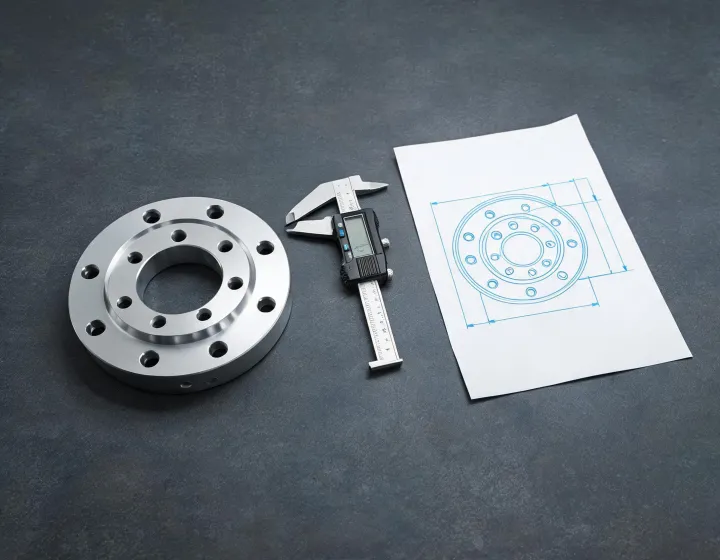
Name the component and vehicle platform, year or OE reference. Give the application boundary and target market.
Record PCD, center bore, thread and other interface dimensions in clear units. Include a current drawing when available.
Describe load, environment, quantity, finish and packaging. Note the delivery schedule and any service constraints.
List required test methods and documents. Confirm applicability by product and market before accepting a compliance claim.
| Component | Key inputs | Decision to resolve |
|---|---|---|
| Spacer / adapter | PCD, bore, thickness, bolt interface | Clearance and engagement |
| Fastener / lock | Thread, length, seat, finish | Wheel and hub compatibility |
| Centering ring | Hub diameter, wheel bore | Material and tolerance |
| Weight | Mass, attachment, rim profile | Surface and service conditions |
Dimensions are application inputs rather than a promise of universal fit. Include tolerances and the drawing revision when known; if a measurement is provisional, mark it clearly so it can be reviewed.
Volume, delivery region, packaging and timing establish the commercial scope.
Drawings, interfaces, tolerances and validation needs define the technical scope.
Installation tools, replacement intervals and local operating conditions complete the picture.
A short list of confirmed inputs and open questions gives each reviewer a practical starting point. The actual scope is agreed for each request.
Include what you know and identify the details still being checked.